
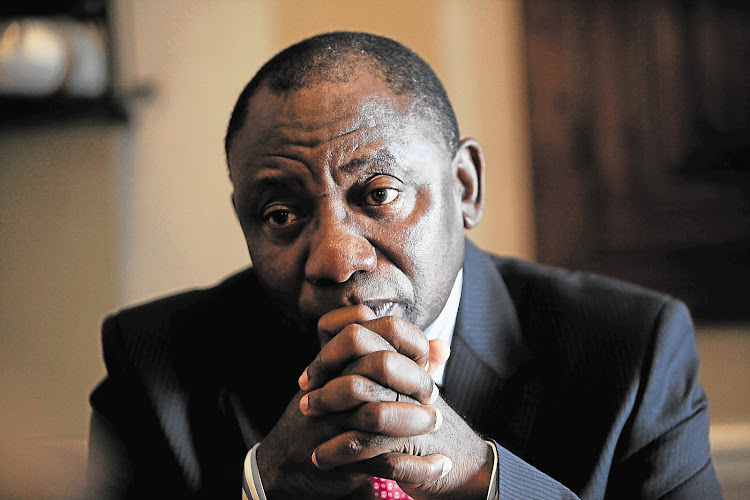
Why should Cyril Ramaphosa resign?
South Africa in Crisis: The
Devastating Impact of Government Failures, Corruption, and Democratic
Subversion
The ascendence of Cyril Ramaphosa to the presidency has been characterized by corruption right from within the ANC in 2017 when he was elected the president of the ANC. His administration from 2018 to now (full 7 years) has been characterized by corruption with Phala-Phala scandal the worst scandal to have ever hit a South African president. To make matters worse, the economy has been in recession since 2019, the thorn of illegal immigration, and foreigners taking over the informal economy has only worsened.
Since
2019, South Africa has experienced a dramatic decline in economic stability,
social security, and overall governance under the leadership of President Cyril
Ramaphosa and the ruling African National Congress (ANC). The failures of this
administration have plunged millions into deeper poverty, unemployment, and
lawlessness, making everyday life unbearable for ordinary South Africans.
2. A Broken Economy: Rising Costs,
Soaring Inflation, and Unemployment
One
of the most devastating consequences of this administration's failure is the skyrocketing
unemployment rate, which has increased from 29.1% in 2019 to 32% in 2024.
The youth of South Africa, once promised a brighter future, now face 58%
unemployment, up from 43%—a betrayal of the hopes and dreams of a
generation.
The
dollar-to-rand exchange rate has plummeted from R14.44 to R18.65,
reflecting the country's declining economic strength and diminishing investor
confidence. As a result, everyday necessities have become unaffordable. The food
basket price has surged from R3,065.28 to R5,297.58, making basic
groceries a luxury for struggling households. Inflation, which stood at 4.1%
in 2019, has climbed to 5.84%, further eroding the purchasing power
of South Africans.
South Africa’s national debt has ballooned from $166 billion to $298 billion, increasing the financial burden on future generations. Meanwhile, the repo rate has surged from 6.5% to 8.25%, making borrowing more expensive and further crippling economic growth.
3.Unaffordable national debt under
Ramaphosa—a legacy of betrayal
When
Cyril Ramaphosa took office in 2018, South Africa’s national debt stood at
R2.49 trillion. Today, it has exploded to R5.2 trillion—a disgraceful doubling
of debt under his watch! The country’s debt-service costs are projected to be
R388.9 billion for the 2025 fiscal year, swallowing a shocking 21.6% of the
national budget—more than what is allocated to social protection, healthcare,
or public safety! Ramaphosa's leadership has driven our country into financial
ruin, and now his government dares to rob the people to pay for its crimes!
4. The Issue of Uncontrolled Illegal
Immigration
One
of the most pressing and neglected crises in South Africa is uncontrolled
illegal immigration, which has placed immense strain on social services,
healthcare, and employment opportunities for South African citizens.
- Displacement
of South African Children in Schools: Schools are overwhelmed by the number of foreign
children, displacing South African kids from enrolment and forcing them
to study far from home, increasing transportation costs and creating
unnecessary hardships for families.
- Health
and Housing System Strain: Healthcare facilities and housing projects are
overburdened as undocumented foreigners access public hospitals and
government-subsidized housing, leading to shortages of resources for
citizens.
- Crime and Border Security: The lack of border enforcement has contributed to rising crime rates, with many illegal immigrants remaining unregistered and unaccountable under South African law.
5. Crime, Corruption, and Social Decay
Crime
has spiraled out of control, with violent murders rising from 57 people
killed per day in 2019 to 75 people killed per day in 2024. Lawlessness and
insecurity now define daily life, with criminals acting with impunity due to an
ineffective and failing justice system.
At
the same time, poverty has increased drastically. In 2019, 13.8 million
South Africans lived in poverty, but by 2024, that number has grown to 18.2
million. The ANC-led administration has prioritized corruption over service
delivery, with wasteful and irregular expenditure totaling R1.52
billion between 2019 and 2023.
- Suspension of School Vendors Instead of Closing Spaza Shops Selling Poisonous Food: Instead of addressing the real issue of illegal and unregulated foreign-owned spaza shops selling expired and poisonous food, the government has instead suspended school vendors, harming local South Africans trying to make a living.
6. Public Protector Findings on CR-17
Campaign Funds: Corruption at the Highest Level
The
Public Protector’s findings on the CR-17 campaign funds exposed the extent
of corruption and financial manipulation in President Cyril Ramaphosa’s
rise to power. The campaign received massive financial contributions from
undisclosed donors, raising serious concerns about undue influence from big
business interests and foreign actors.
7. Public Outrage over Eased Visa Requirements for Nigerian Citizens
The recent decision to ease visa requirements for Nigerian citizens has sparked public outrage, with many viewings it as a move that could worse a deepening crisis of the use of illegal drugs, prostitution, human trafficking, fraud and other crimes that Nigerian citizens are committing in this country. This will further devalue South African passport across the globe as it is already happening. This decision, perceived as prioritizing foreign interests over South Africans, has further alienated your administration from the electorate.
8. Section 89 Independent Panel Report:
The Phala-Phala Scandal Cover-Up
The Section 89 Independent Panel Report revealed that Ramaphosa may have violated the Constitution and abused his power in the Phala-Phala farm scandal. The report highlighted that:
- -Large sums of undeclared foreign currency were hidden at the president’s farm.
- - The money was allegedly stolen, yet Ramaphosa failed to report it to law enforcement.
- - His actions violated anti-corruption laws, yet Parliament protected him from impeachment, undermining democracy and the rule of law.
9. The Government of National Unity (GNU): Subversion of Democracy by Big Business
The
so-called Government of National Unity (GNU) is nothing more than a
subversion of democracy, orchestrated by big businesses and corporate
elites who want to control the political landscape for their own interests.
The GNU
was created to protect Ramaphosa and the ruling elite, ensuring
that the ANC remains in power despite its failures. Instead
of delivering real political change, the GNU preserves the influence of
big business over government decisions, bypassing the will of the
people.
10. Collapse of Our National Defence
Force: A National Embarrassment
South
Africa’s military, once a strong and respected force, is now a shadow of its
former self. The South African National Defence Force (SANDF) has been
humiliated by M-23 rebels in Goma, the Democratic Republic of the Congo (DRC).
Our soldiers are currently trapped by M-23 rebels, unable to escape or launch a counter-offensive. This failure is a direct result of underfunding, mismanagement, and the ANC government’s neglect of national defense. South Africa can no longer defend itself, let alone participate in international peacekeeping efforts.
This is a national disgrace, proving that the government has completely failed in protecting both our borders and our international reputation.
11. Decimation of Small Businesses
During Lockdown
The
COVID-19 lockdown of 2019 destroyed thousands of small businesses, many
of which have still not recovered. Instead
of helping struggling businesses, the government used COVID relief funds
to enrich political allies and close associates.
While
ANC politicians and their friends grew richer from corruption, ordinary
South Africans were pushed deeper into poverty.
Funds
meant to assist entrepreneurs and small business owners were looted,
leaving many South Africans financially ruined. Corporate
chains survived while small businesses collapsed, further increasing
unemployment and economic hardship.
Conclusion: The Need for Change
The
statistics and scandals paint a clear picture of failure: rising
unemployment, worsening poverty, escalating crime, uncontrolled illegal
immigration, a collapsing military, widespread corruption, and a deliberate
subversion of democracy. South Africa cannot afford to continue on this
path.
The people must demand accountability and take action to remove a
government that has neglected its duty to serve and protect its citizens.
“History is not written by those who wait—it is forged by
those who rise! We will not be silenced; we will not be moved. The chains of
injustice will be shattered, and power will return to the people. The
revolution is here, and nothing can stop us now!”
#CyrilMustFall #DefendSouthAfrica #RAMAPHOSAisHISTORY #OccupytheUnionBuildigs